When the festive season arrives, millions of Indian households prepare their homes for Diwali, often beginning their celebrations with a trip to the jeweller or the market. While purchasing gold, silver, or new utensils is a widely recognized tradition, the true spiritual heart of Dhanteras goes much deeper than material wealth. For generations, this auspicious day has been primarily dedicated to Lord Dhanvantari, the divine physician and the Hindu god of medicine and Ayurveda.
Understanding why Lord Dhanvantari is worshipped on this specific day shifts the focus of the festival from the accumulation of physical wealth to the celebration of health and well-being. According to ancient Indian wisdom, “health is the greatest wealth” (Arogyam Dhana Sampada). This comprehensive guide explores the rich mythology of Lord Dhanvantari, the cultural significance of Dhanteras, the story of the cosmic ocean’s churning, and practical advice on choosing the perfect spiritual idol for your home altar to invite vitality into your life.
What Is Dhanteras?
Dhanteras, also known as Dhanatrayodashi, marks the official beginning of the five-day Diwali festival. The word itself is a combination of two Sanskrit terms: “Dhan,” meaning wealth, and “Teras,” which refers to the thirteenth day of the dark fortnight (Krishna Paksha) in the Hindu lunar month of Kartik.
Across India, this day is celebrated by cleaning homes, lighting the first diyas of the season, and creating welcoming rangolis at entrances. While modern celebrations often emphasize shopping and exploring a festive collection for home upgrades, the traditional core of Dhanteras is rooted in prayers for longevity, protection from untimely misfortune, and the overall well-being of the family. It is a day when the spiritual and the material intersect, reminding us that true prosperity cannot be enjoyed without a healthy body and a peaceful mind.
Who Is Lord Dhanvantari?
In Hindu theology, Lord Dhanvantari is revered as an incarnation (avatar) of Lord Vishnu, the preserver of the universe. He is acknowledged as the physician of the Devas (gods) and the original expounder of Ayurveda, the ancient Indian science of life and natural healing.
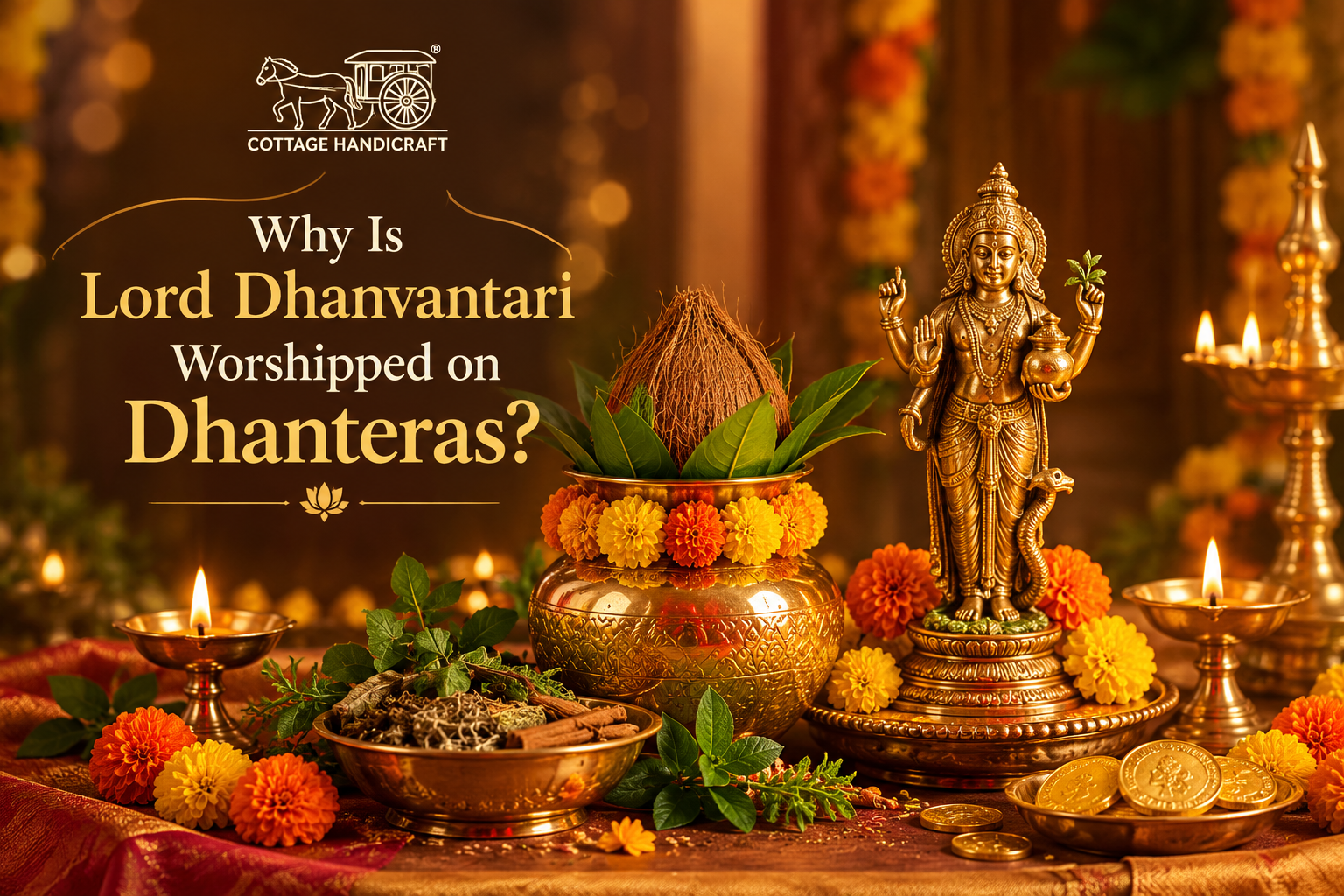
Lord Dhanvantari is typically depicted as a handsome deity with four hands, echoing his connection to Lord Vishnu. He represents the divine healing energies of the universe. In traditional texts, he is described as having a dark, radiant complexion, clad in bright yellow garments, and possessing a benevolent, calm expression that immediately brings comfort to those who pray to him. Today, he is worshipped by Ayurvedic practitioners, doctors, and households seeking relief from ailments and the preservation of good health.
The Story of Lord Dhanvantari and Samudra Manthan
To understand why Lord Dhanvantari is so deeply connected to Dhanteras, one must look back to one of the most famous episodes in Hindu mythology: the Samudra Manthan, or the churning of the cosmic ocean.
According to the Puranas, the Devas (gods) and Asuras (demons) were constantly at war. After losing their strength and fortune due to a sage’s curse, the Devas were advised by Lord Vishnu to form a temporary alliance with the Asuras to churn the Ocean of Milk (Kshira Sagara). Their goal was to extract the nectar of immortality (Amrita). Using Mount Mandara as the churning rod and Vasuki, the king of serpents, as the churning rope, the two factions began their monumental task.
As the ocean was churned, numerous divine objects, beings, and treasures emerged from the depths, including Goddess Lakshmi, the deity of wealth. Finally, on the day of Dhanatrayodashi, Lord Dhanvantari majestically emerged from the turbulent waters. In his hands, he carried the sacred Amrita Kalasha, the pot containing the nectar of immortality, alongside the sacred texts of Ayurveda. Because he appeared on this specific lunar day, Dhanteras is celebrated as his birth anniversary, known as Dhanvantari Jayanti.
Why Is Lord Dhanvantari Worshipped on Dhanteras?
The worship of Lord Dhanvantari on Dhanteras is a powerful reminder that material riches are secondary to physical and mental health. While Goddess Lakshmi is worshipped for financial prosperity, Lord Dhanvantari is invoked first to grant the health required to enjoy that prosperity.
In recent years, the Indian government has officially recognized the profound connection between Lord Dhanvantari and indigenous medicine by declaring Dhanteras as National Ayurveda Day. Families perform Dhanvantari Puja by offering flowers, lighting brass diyas, and chanting healing mantras. The prayers directed to him seek the removal of physical and psychological suffering, asking for his divine intervention in purifying the body and mind.
What Does Lord Dhanvantari Symbolise?
The iconography of Lord Dhanvantari is rich with spiritual and medical symbolism. Each of the items he holds in his four hands carries a specific meaning relevant to healing and human well-being:
The Shankha (Conch): Symbolises the cosmic sound of creation and the dispelling of ignorance. Its resonant sound is believed to purify the environment of negative energies.
The Chakra (Discus): Represents the mind, the life force, and the cyclical nature of time. It is a tool for cutting through disease and spiritual blockages.
The Jalauka (Leech): A crucial symbol of ancient Ayurvedic surgical practices. Leeches were traditionally used in bloodletting therapies to remove toxins and purify the bloodstream.
The Amrita Kalasha (Nectar Pot): The ultimate symbol of rejuvenation, vitality, and immortality. It represents the divine healing power that cures all ailments.
Choosing a Dhanvantari Idol for Your Home
Bringing an idol of Lord Dhanvantari into your home is a beautiful way to anchor your space with healing energy. When selecting a piece for your home altar or consulting a health and vitality collection, there are several practical and spiritual factors to consider.
First, consider the material. In traditional Hindu worship, brass and bronze are highly favoured because they are considered pure, resonant metals that attract and retain positive spiritual vibrations. Unlike fragile materials, solid brass is highly durable and easy to maintain with regular, gentle cleaning.
Second, consider the placement. According to Vastu Shastra principles, the Northeast corner (Ishaan) of your home is the ideal location for a spiritual altar, as it is associated with divine grace. Before purchasing, measure your available altar space to ensure the idol fits comfortably without crowding other deities. Ensure that you have adequate height clearance and a sturdy base to support the weight of a solid metal idol.
Exploring the Dhanvantari Idol at Cottage Handicraft
If you are looking for a beautiful, authentic piece for your home, the Classic Amrit Brass Dhanvantari idol is an exceptional choice. Standing at 8.5 inches tall and priced at ₹4,750, this premium brass Dhanvantari idol is perfectly proportioned for both home altars and office desks.
Crafted with meticulous attention to detail, this idol beautifully captures the serene expression of the deity and clearly defines the four sacred objects in his hands. Because it is cast in premium brass, it offers a warm, reflective presence that deepens into a rich, natural patina over time. Whether you are purchasing it for your own daily prayers or looking to explore spiritual idols as a meaningful gift for a loved one recovering from an illness, this piece serves as a timeless reminder of divine healing and protection.
The Cottage Handicraft Heritage
When you purchase artisanal decor, you are not just acquiring an object; you are inviting centuries of cultural heritage into your home. Based in Jaipur, Rajasthan, Cottage Handicraft has spent over two decades celebrating authentic Indian artistry. Every piece in our catalogue is thoughtfully hand-finished by skilled artisans who have inherited their techniques across generations.
Unlike mass-produced factory items, authentic handcrafted brass work carries subtle, unique hallmarks of the human hands that created it.
Frequently Asked Questions
1. Can I worship Lord Dhanvantari every day, or only on Dhanteras?
While his worship is especially prominent on Dhanteras, you can absolutely pray to Lord Dhanvantari every day. Many people chant the Dhanvantari Mantra daily for good health, immunity, and protection from illnesses.
2. In which direction should the Dhanvantari idol face at home?
According to general Vastu guidelines, spiritual idols should ideally be placed in the Northeast corner (Ishaan) of the home. The idol should ideally face West, so that when you sit down to pray, you are facing East towards the rising sun.
3. What offerings are made to Lord Dhanvantari during puja?
Traditional offerings include fresh yellow flowers, incense, light (via a brass diya), and pure water or milk. Naivedhya (food offerings) often include traditional sweets and sometimes medicinal herbs or Tulsi leaves, honouring his connection to nature and Ayurveda.
4. How do I maintain and clean a brass Dhanvantari idol?
To maintain the shine of premium brass, simply dust it regularly with a soft, dry cotton cloth. For a deeper clean or to remove slight oxidation, you can use a specialised brass cleaner or natural traditional mixtures like lemon and salt, ensuring you dry the idol completely afterward to prevent water spots.
5. Is a Dhanvantari idol a good gift for someone?
Yes, it is considered a deeply thoughtful and auspicious gift, particularly for medical professionals, students of Ayurveda, elderly family members, or anyone recovering from a health challenge, as it symbolises a blessing for long life and vitality.
Final Thoughts
Dhanteras is a beautiful, multifaceted festival that asks us to pause and evaluate what we truly value. While the glittering displays of gold and silver are a joyous part of the Diwali season, the presence of Lord Dhanvantari reminds us that our physical health and spiritual peace are our most vital assets.
By understanding the ancient story of Samudra Manthan and bringing a carefully chosen brass Dhanvantari idol into your home, you honour a tradition that has celebrated holistic well-being for millennia. As you light your diyas this Dhanteras, may your home be filled not just with material prosperity, but with the lasting glow of health, vitality, and peace.