
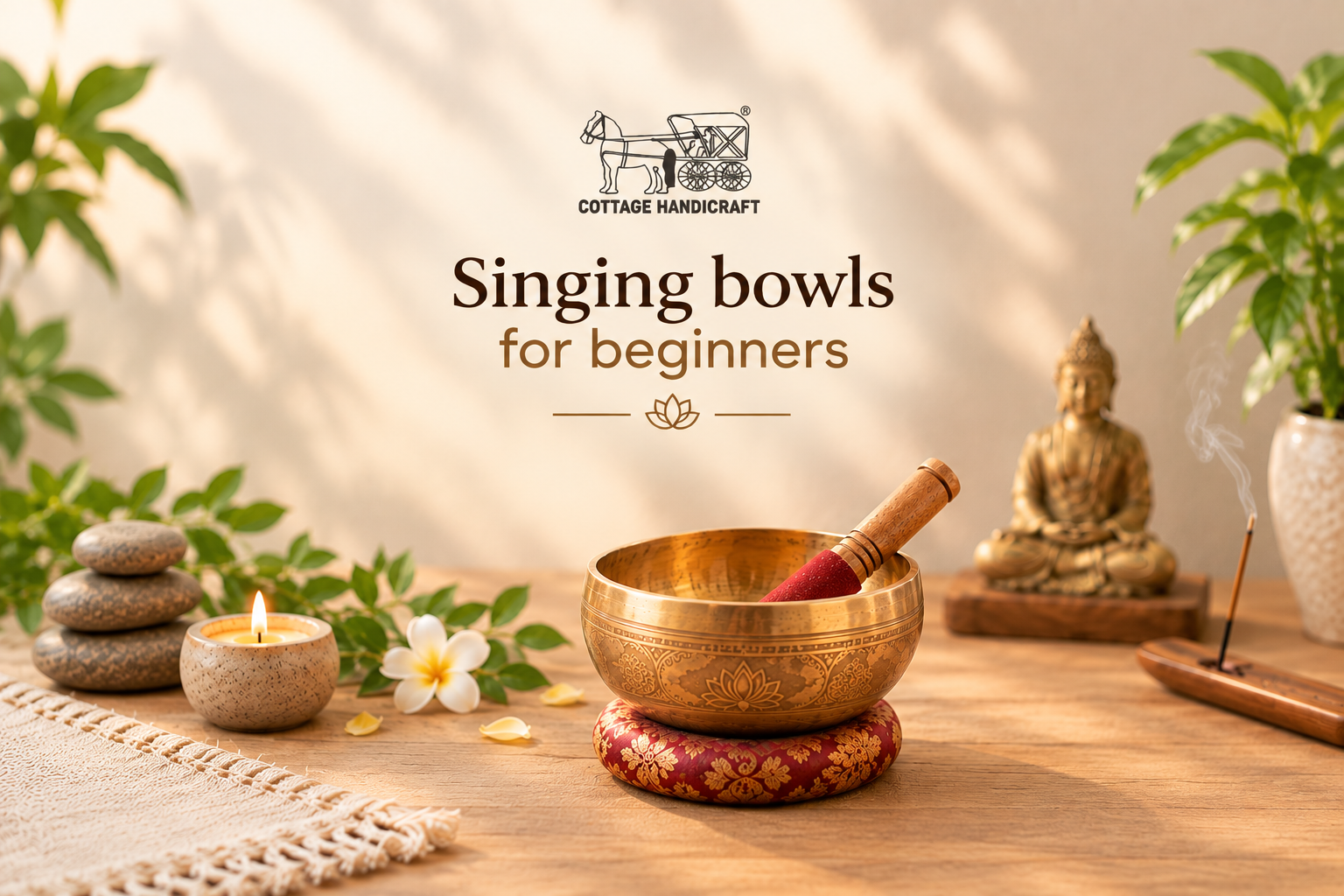
You might have heard the lingering tone of a metallic bowl at a yoga class or seen one sitting on a friend’s shelf. The sound can encourage a moment of pause and focused listening. If you are curious about starting a quiet daily practice, understanding the singing bowl benefits can help you decide if one is right for your home.
Many people feel intimidated by the idea of meditation or sound therapy because it seems complicated. The good news is that you do not need any special skills to start. This guide explains how these interesting instruments work and how you can use one without needing any previous experience.
What Is a Singing Bowl and How Does It Work?
A singing bowl is essentially an inverted bell. Instead of hanging upside down with a clapper inside, it rests flat on a surface or in your hand. You play the instrument using a wooden or padded stick called a mallet.
These bowls are typically crafted from a blend of metals. Traditional Indian handicraft methods often involve hand-beating the metal into shape. This craftsmanship creates a unique physical structure that vibrates when struck.
When the mallet hits the metal edge, it produces rich and sustained musical note. The sound does not stop immediately. The sound can continue for several seconds, with the exact sustain depending on the bowl, how it is played and its construction. You can also trace the mallet around the outside edge to create a continuous humming sound. This continuous vibration is why people say the bowl is singing.
Simple Ways to Use a Singing Bowl Every Day
Understanding the everyday uses of singing bowls helps beginners see how easily they fit into a normal routine. You do not need to sit perfectly still for an hour to enjoy the experience.
Many people use them to mark the beginning or end of their personal quiet time. Striking the metal creates a clear signal that it is time to put the phone away and wind down. This makes them excellent tools for establishing a morning routine before the house gets busy.
They are also widely used alongside breathing practices. You can strike the bowl and time your exhales with the fading sound. Yoga practitioners often use them to signal the end of a physical session and transition into a resting phase.
If you work from home, simply keeping one on your desk offers a way to break up the day. A single strike provides a moment to reset your focus away from a computer screen.
Understanding the Benefits of Singing Bowls
When you search for the benefits of singing bowls, you might find bold claims about physical healing or medical cures. It is important to approach these claims with a grounded mindset. While early research suggests that sound practices can support relaxation, a singing bowl is not a medical treatment.
The most realistic singing bowl benefits come from how the sound influences your attention. Our minds are constantly processing thoughts, worries and plans. Trying to force your brain to stop thinking rarely works.
The bowl offers a different approach. It gives your mind a very simple job. When you strike the metal, your attention shifts to the complex layers of the sound. You listen to how the tone changes as it gets quieter.
This simple act of listening anchors you in the present moment. It pulls your attention away from daily stress and redirects it to an immediate physical sense. Over time, this deliberate focus can help you build a more mindful approach to your daily life.
Creating a Calmer Moment with Sound
Finding time to relax is difficult when you are constantly busy. Using a singing bowl for relaxation helps because it creates a deliberate pause. You cannot rush the sound of a vibrating bell. You simply must sit and wait for it to finish.
To use a singing bowl for stress relief, try setting it up in a comfortable corner of your room. At the end of a busy day, sit down and strike the edge gently. Close your eyes and follow the sound as it slowly disappears.
Notice how the sound seems to echo in the room. As the tone fades, naturally slow down your breathing. As you listen to the sound and slow your breathing, you may find it easier to settle into a quieter state.
Doing this for just five minutes a day can create a clear boundary between your working hours and your evening rest. For some people, making this a regular evening ritual can create a clear transition from work time to rest.
Can a Singing Bowl Support Your Meditation Practice?
Meditation is challenging for most beginners because sitting in silence often makes the mind race faster. This is where using a singing bowl for meditation becomes incredibly helpful.
The sound acts as a focal point. Instead of sitting in silence and getting frustrated by your own thoughts, you use the auditory cue to guide your practice.
Start by holding the bowl in your flat palm. Strike the side and listen closely. Try to identify the exact moment the sound completely stops. When your mind inevitably wanders to your grocery list or a work email, do not judge yourself. Simply strike the bowl again.
The new sound pulls your attention back. Every time you strike the metal, you restart your focus. This removes the pressure of trying to achieve perfect silence. The bowl becomes a gentle guide that brings you back to the room whenever you get distracted.
A Simple Guide to Using Your First Singing Bowl
Learning how to use singing bowls is a physical process. The technique is simple but requires a little patience.
First, you need to hold the bowl correctly. For a small bowl, you can rest it gently on your open palm. Larger or heavier bowls are usually better placed on a stable cushion or suitable surface. Keep your fingers straight and flat. If your fingers curl up and touch the sides of the metal, they will absorb the vibration and deaden the sound.
Take the mallet in your dominant hand. Hold it like you would hold a large pen.
There are two primary ways to play. The easiest method is striking. Gently tap the outside rim of the bowl with the padded part of the mallet. Let the sound ring out completely before striking it again. Avoid hitting it too hard, which can create an unpleasant clanging noise.
The second method is the rim technique. Strike the bowl once to get the vibration started. Then immediately press the wooden part of the mallet against the outside edge and slowly trace circles around the rim.
Beginners often make the mistake of moving the mallet too fast. Speed is not important. The secret is applying firm and consistent inward pressure against the metal. If you hear a rattling sound, you are likely moving too quickly or not pressing hard enough. Slow down and maintain contact with the edge.
Choosing the Right Singing Bowl for Beginners
There is no single best singing bowl for beginners because the right choice depends on your personal preferences. However, keeping a few practical details in mind will help you find a great starting instrument.
Size is the most important factor. Small bowls under five inches in diameter are very easy to hold in one hand. They produce a higher pitch and are generally more affordable. However, they can be slightly harder to play using the rim technique because they require very precise pressure.
For many beginners choosing a metal singing bowl, a medium-sized bowl around five to seven inches can be a practical starting point. The ideal size still depends on the bowl’s design, how you plan to use it and how comfortable it feels in your hands. They balance easily in the hand and produce a deep and resonant sound that lasts a long time. The larger surface area also makes the rim technique much easier to learn.
Consider how the instrument looks as well. Many people keep their bowls displayed on a shelf when not in use. Traditional handcrafted products offer beautiful visual details that add to the atmosphere of a room. Finding an artisan piece that you like looking at will encourage you to use it more often.
Remember that each hand-beaten bowl has a slightly unique tone. Choose one that appeals to your ears and fits comfortably in your space. The most effective meditation tool is simply the one you feel drawn to use regularly.
Frequently asked questions
What are the actual benefits of using a singing bowl?
The primary benefit is giving your mind a simple, clear point of focus. Listening to the sustained sound helps redirect your attention away from busy thoughts, making it easier to naturally lower stress and wind down after a busy day.
Which singing bowl size is best for a beginner?
A medium-sized bowl, usually between five and eight inches in diameter, is highly recommended for beginners. It balances easily in your palm, produces a deep, soothing sound, and is the easiest size to use when learning how to make the bowl sing around the rim.
Where is the best place to keep a singing bowl at home?
You can place it anywhere you want to create a peaceful atmosphere, such as a home office desk, a bedroom corner, or a dedicated meditation space. Keeping it resting on a soft cushion makes it a beautiful, handcrafted decor piece that is always ready for a quick mental break.
Do I need special training to use it for meditation?
Not at all. You simply rest the bowl on your flat, open palm and gently tap the outside edge with a mallet. The lingering sound acts as an anchor for your attention. Whenever your mind wanders, you just strike the metal again to bring your focus back to the present moment.
How long should I play a singing bowl to feel relaxed?
Even a short session of three to five minutes can be highly effective. The practice of sitting still, listening to the long tone fade completely, and matching it with slower breathing naturally helps break the cycle of a stressful day.