
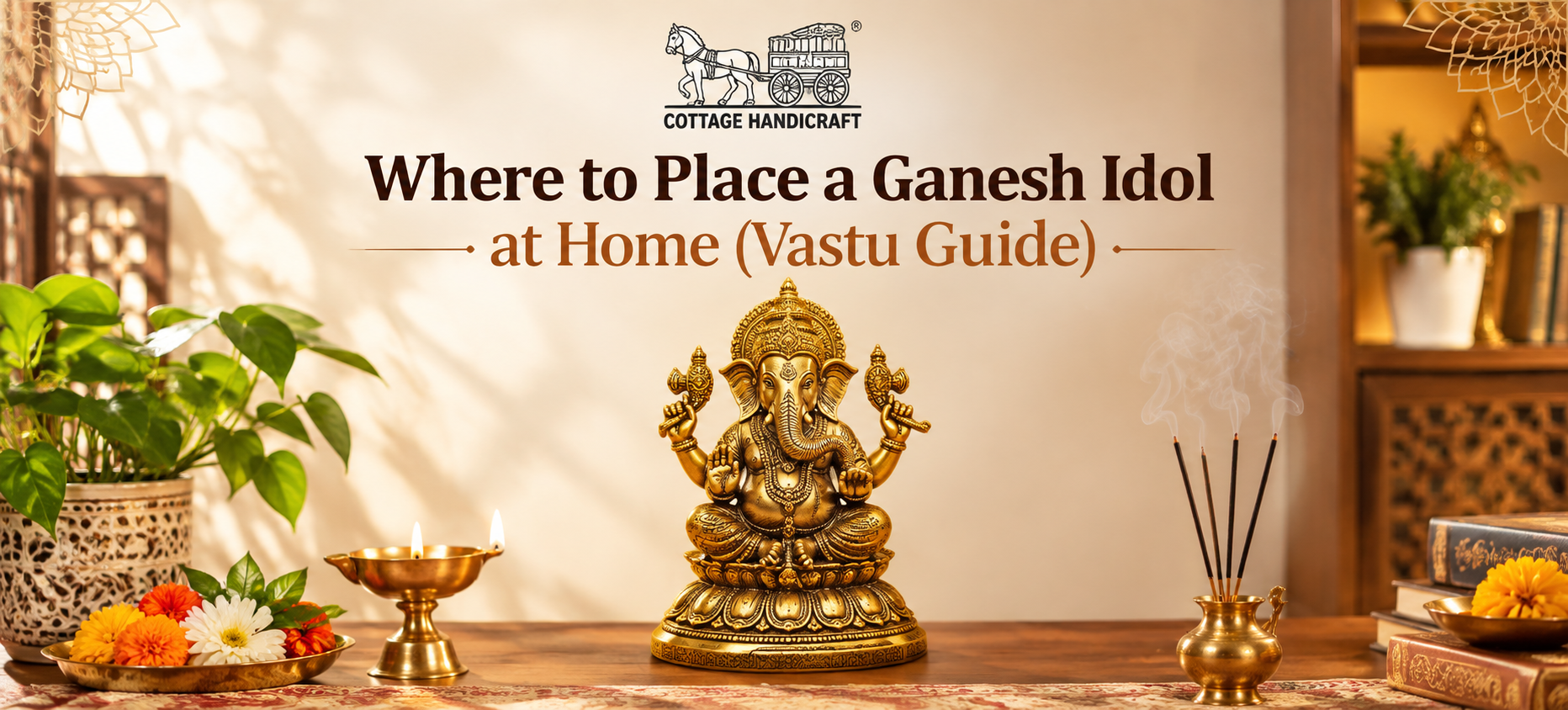
Wondering about the right Ganesh idol placement Vastu for your home? According to traditional Vastu beliefs, the north-east (Ishaan) corner is considered the most auspicious location for Lord Ganesha. This guide explains the best directions, suitable rooms, and practical placement tips to help you create a peaceful home temple.
Which Direction Is Best for a Ganesh Idol?
While the north-east (Ishaan) corner is the most recommended location, the east and north directions are also considered suitable in many homes. Here’s how each direction is traditionally viewed in Vastu Shastra.
When deciding on the best direction for Ganesh idol positioning, you should ensure the deity’s back rests against a solid exterior wall rather than a window or a temporary partition. A solid wall represents stability and support in life.
It is also advised to avoid the south direction completely. Vastu practitioners recommend against placing deities facing the south, as this direction is associated with different elemental energies that do not align with daily household worship.
Ideal Places to Keep a Ganesh Idol at Home
A dedicated pooja room is traditionally considered the best place for a Ganesh idol. If you don’t have one, the living room or a clean space near the entrance can also be suitable when placed according to Vastu guidance.
The Dedicated Pooja Room
Naturally, a separate worship area is the top choice. When evaluating pooja room Vastu for Ganesh, ensure the space is well-ventilated and brightly lit. The deity should be placed on a raised platform, an altar, or a beautifully carved wooden home temple to show respect and maintain cleanliness.
The Living Room
If your house layout does not allow for a separate worship space, the living room is a highly respected alternative. You can place the deity on a clean, elevated shelf or a small cabinet in the north-east corner of the room. Just ensure the area remains uncluttered and the deity is kept away from heavy foot traffic, television sets, or shoe racks.
The Main Entrance
Placing a deity near the entrance to deflect negative energy is a common practice in many households. If you choose this route, ensure the idol is facing the inside of the house. If you prefer the deity to face outwards, many Vastu practitioners recommend placing two statues back-to-back, so the deity never has its back turned to the interior of the home.
Quick Vastu Placement Tips
- Maintain Elevation: Always place the deity on a raised platform, a small stool, or a clean cloth. It should never rest directly on the floor.
- Optimal Lighting: Keep the area well-lit with natural light or a small diya (lamp) to encourage positive energy flow.
- Avoid Clutter: Keep the surrounding space clean and free from unnecessary household items.
- Directional Flow: The Ganesh idol direction in home should allow the worshipper to face east or north during prayers.
- Check the Condition: Ensure the statue is in perfect condition; chipped or broken pieces should be respectfully immersed in water and replaced.
Choosing the Right Ganesh Idol for Your Home
When selecting a piece for your residence, you must consider both the posture of the deity and the material it is crafted from.
For household environments, a seated Ganesha (known as Lalit asana) is heavily preferred. The seated posture represents a calm, meditative state, which is believed to bring stability, harmony, and peace to the family.
In terms of materials, a brass Ganesh idol for home environments is incredibly popular due to its durability, classic shine, and traditional significance. Brass is easy to maintain and holds up well over decades of daily rituals. You might also consider materials like silver, crystal, or eco-friendly clay depending on your aesthetic preferences.
If you are currently setting up a new worship space, exploring a high-quality Ganesh idol collection can help you discover a piece that resonates with your family’s specific needs.
The table below compares seated and standing Ganesh idols to help you choose the most suitable option for your home.
| Feature | Seated Posture (Lalit asana) | Standing Posture (Abhanga) |
| Energy Represented | Calmness, focus, and domestic stability | Active energy, momentum, and enthusiasm |
| Ideal Environment | Residential spaces and home temples | Workplaces, offices, and community centres |
| Daily Worship | Highly recommended for homes | Less common for residential setups |
Left vs Right Ganesh Trunk: Which Is Best for Your Home?
According to Vastu Shastra, the direction Lord Ganesha’s trunk curves is a crucial detail. For a home temple Ganesh idol, you should always look for a trunk that curves to the left (known as Vamamukhi).
A left-facing trunk is associated with a calm, peaceful demeanour. It is believed that this form of the deity is much easier to please with simple, daily prayers and standard offerings. Conversely, a trunk pointing to the right (Dakshinabhimukhi) represents a fiery, intense energy. Idols with right-facing trunks are typically reserved for grand temples where priests perform strict, rigorous, and highly specific rituals every single day.
For those looking to bring a peaceful presence into their living space, browsing handcrafted Ganesh idols with left-facing trunks is the most appropriate choice.
Common Ganesh Idol Placement Mistakes
Even with careful planning, it is easy to make a few common errors. Keep these rules in mind to maintain a serene and respectful environment:
- Under the Staircase: Never place your worship area under a staircase. People walking on the stairs above are considered highly disrespectful to the energies below.
- Near Bathrooms: Avoid placing the deity on walls shared with a bathroom or directly outside a restroom door.
- In the Bedroom: Worship spaces should be kept separate from sleeping quarters. If you live in a studio apartment, try to cover the shrine with a clean curtain when you are sleeping.
- Multiple Idols: Vastu practitioners recommend keeping only one statue of Lord Ganesha on your primary altar. Multiple statues of the same deity can result in crossing or conflicting energies.
Frequently Asked Questions
Q1: Which is the best direction to place a Ganesh idol in a house?
The north-east corner, also known as the Ishaan corner, is considered the most auspicious direction. The east and north directions are also highly suitable alternatives.
Q2: Should the idol face the door?
If placed in a living room or pooja room, the idol does not need to face the door. If placed specifically at the entrance to ward off negativity, it should ideally face the main doorway.
Q3: Which trunk direction is good for a home Ganesh idol?
A trunk curving to the left is ideal for residential spaces. It signifies a calm, peaceful energy that aligns well with simple daily household worship.
Q4: Can I keep a standing Ganesh idol at home?
While not strictly forbidden, standing idols represent active, enthusiastic energy and are generally better suited for workplaces or offices. A seated posture is preferred for the home to promote stability.
Q5: Is it okay to gift a Ganesh statue to someone?
Yes, it is considered a very thoughtful and auspicious gift, especially for new beginnings like a housewarming, a wedding, or starting a new business venture.
Q6: Can I place the deity in a wooden home temple?
Absolutely. A wooden temple is highly recommended as it provides a clean, elevated, and dedicated space that aligns perfectly with traditional guidelines.
Q7: What should I do if my idol gets accidentally chipped or broken?
According to traditional beliefs, damaged statues should not be kept in the house. They should be respectfully immersed in a natural body of flowing water and replaced with a new one.
This guide is based on commonly followed Vastu traditions and cultural practices. Recommendations may vary across regions, families, and personal beliefs.